The Office of Geodesy, Cartography and Cadastre of the Slovak Republic (ÚGKK SR) operates the application “Information System List of Structures” (ISZS), which we have created for the Office. The application is used to enable municipalities to enter selected data on buildings into the application at the same time as issuing a decision on the use of a family house, an apartment in an apartment building, as well as on the use of an apartment building.
1. Contains only up-to-date data at all times
The information system of the List of Buildings takes data from the Real Estate Cadastre, the Register of Addresses and the ZBGIS map client through electronic services, which ensures their constant updating and topicality.
2. Only authorised persons will have access to the data
The list of buildings is not publicly available. Only registered users, such as municipalities, municipal office staff or staff of the ÚGKK SR, will have access to the data. It records new facts about existing buildings and new constructions. Baseline information and base maps are uniform throughout the country.
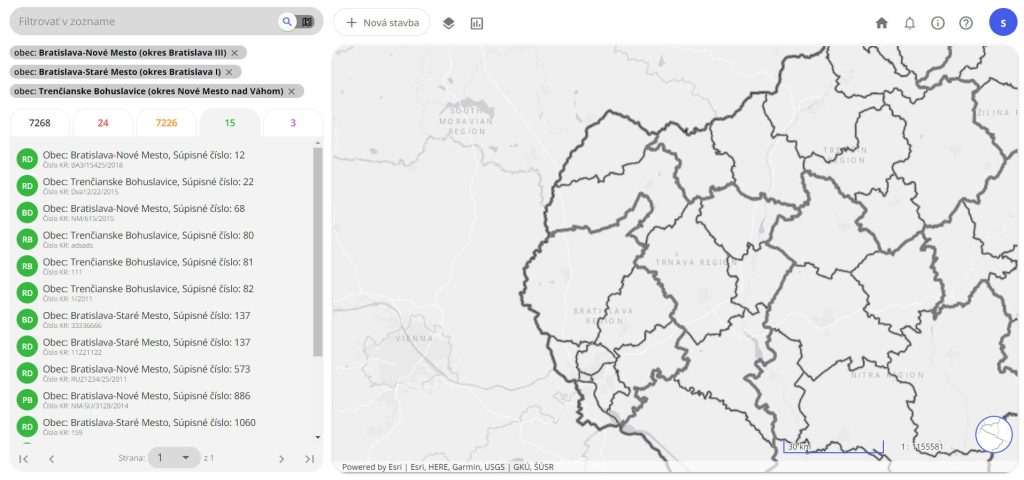
3. Records details of the building
In addition to the list of buildings, the staff records both new and old building information: usable, floor area of the house and apartment, number of rooms in the house and apartment, as well as the number of floors of the building. The construction of the building, the date of approval of the family or apartment house are also recorded. In addition to these data, other supporting information about the building, such as the building number, street, parcel number, etc., is recorded in order to identify the building more accurately. The whole process thus involves the reconciliation of data between the municipalities and the Cadastre of Immovable Property.
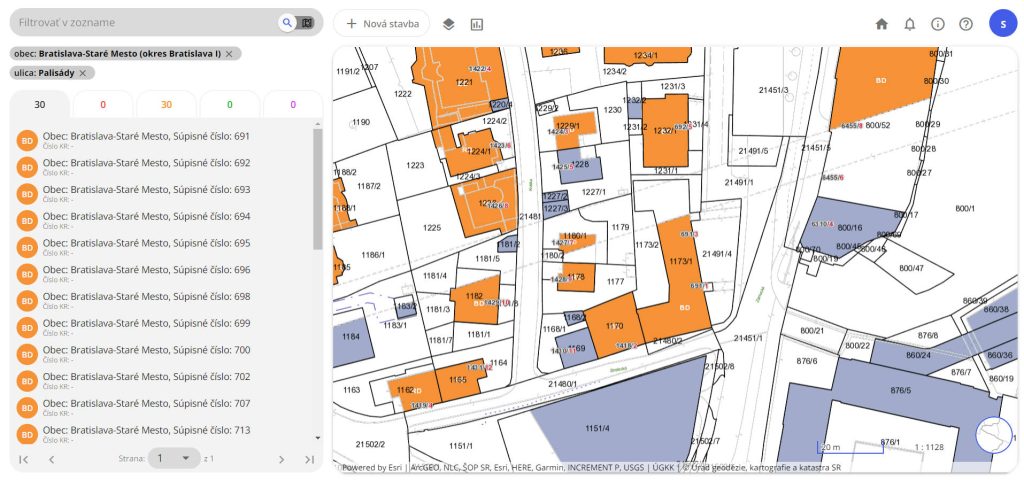
4. Finding out information about a building has never been easier
Office staff working with the Building List application can very quickly find what they need or easily filter the data by territorial units (municipality, cadastral area), by street, building type, registration number and many other attributes. They have a history of approvals and reports and of course the export of searched data. For each searched building, details of the building and information about the entrances are available, which can be browsed step by step. All functionalities are available over different map backgrounds which speeds up the work considerably.
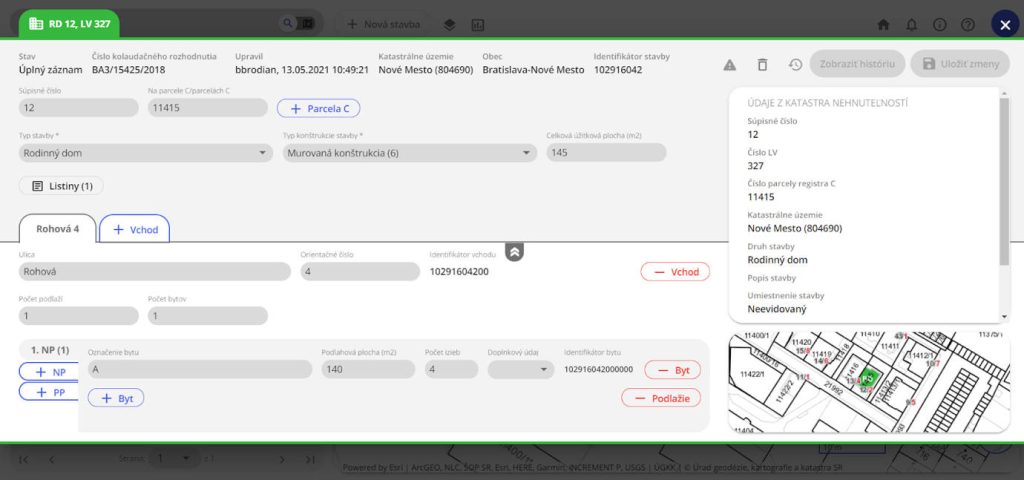
5. It expands the boundaries
The Building List Information System finds its use beyond its primary mission. Data from the list were used in the population, house and housing census. The Ministry of Construction and Transport of the Slovak Republic draws from it summary information on construction sites, which in the past had to be laboriously compiled by municipal staff. They are now available online and at any time.
Once the building permits, zoning plans are completed, the basis for the building procedures will be established. The registration of energy certificates will help to determine the energy performance of buildings.
An interesting feature is the information on real estate prices, which the Cadastre of Real Estate is obliged to register at the time of transfer of ownership. It is used by the National Bank of Slovakia when drawing up statistics on the growth of property prices in the Slovak Republic over a specified period, so these statistics are based on reality.
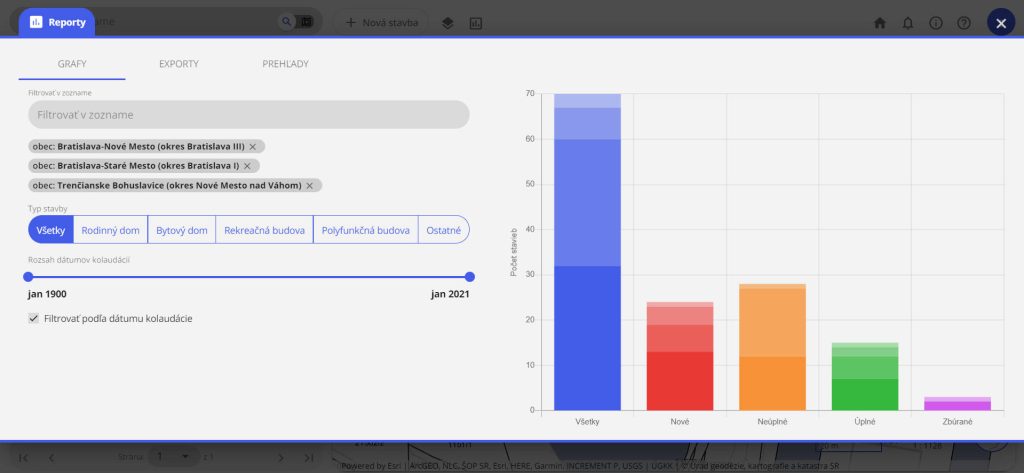
The Building Inventory Information System could be used in the formulation of pricing policies for property taxation. It would allow municipalities to manage their tax policy and adjust it according to the value of a building in a given locality. They would be able to manage the construction process effectively. Among other things, the ISZS could serve as a support for housing policy solutions in Slovakia, as its data base would provide an overview of the housing situation and housing availability in Slovakia.